Self Certificate Form Online: Simplifying Your Sick Leave Process

When you wake up feeling too unwell to work, the last thing you want is a complicated process to prove you’re genuinely sick. The good news is that for short-term illness in the UK, you can often handle everything online without visiting a doctor.
A self certification form allows employees to confirm their own sickness absence for up to 7 days without medical evidence from a healthcare professional. Whether you use your employer’s HR portal, download the official HMRC form, or simply send an email, the process is designed to be quick and straightforward.
This guide walks you through exactly how to complete a self certificate form online, when you need one, and what happens when your sickness lasts longer than the self-certification threshold.
Quick answer: how to do self certification online today
UK employees can self certify sickness for the first 7 calendar days using online forms, email, or their employer’s HR systems. You do not need a GP fit note for absences of 7 days or less—self certification is usually acceptable.
Your main options for completing self certification online:
- Download the HMRC SC2 form from gov.uk, fill it digitally, and email it to your manager or HR
- Log into your employer’s HR portal (e.g. Workday, SAP SuccessFactors, BreatheHR) and complete their own self certification forms
- Send an email to your line manager or HR with your illness details, dates, and a declaration—if your employer’s company policy allows this method
- Use a free PDF editor to complete and sign the SC2 form electronically
For sickness of 7 days or less (including weekends and bank holidays), most employers do not require a sick note from a doctor. Self certification covers you.
Quick checklist to self certify today:
- Record the exact dates you were too ill to work (first day off through to return date)
- Note the nature of your illness or injury in plain language
- Include your name, job title, and national insurance number
- Submit via your employer’s preferred method (online form, email, or portal)
- Keep a copy for your records
For absences starting in 2025, the same 7-day self-cert rule still applies unless your employer policy says otherwise. You can find official guidance on the gov.uk page “Taking sick leave” for the most current rules.
What is a self certificate form?
A self certificate form (sometimes called self certification) is a document completed by an employee to confirm they were too unwell to work for a short period, without needing a doctor’s note.
This form allows you to provide proof of your sickness absence for payroll and HR purposes. It shifts the responsibility to you—the employee—to honestly declare your illness, rather than requiring a medical practitioner to verify it.
The form is typically used when:
- Your sickness lasts 7 days or less
- Your employer does not require a GP certificate for short absences
- You need to qualify for statutory sick pay or company sick pay
Some employers allow self certification for up to 14 days based on their own internal policy, though the standard threshold is seven days. Always check your contract or staff handbook to confirm what rules apply at your workplace.
Alternative names you might see:
- Self certification form SC2
- Sickness self certificate
- Employee sickness declaration
- Self certificate sick note
What a typical self certification form captures:
| Section | Details Required |
|---|---|
| Employee details | Name, NI number, job title, department |
| Employer details | Company name, manager name |
| Absence dates | First and last day you were incapable of work |
| Nature of illness | Brief description of symptoms or condition |
| Declaration | Signed statement confirming the information is true |
For employees, the main purpose is to justify absence and support payment claims. For employers, it creates a consistent record for absence management, payroll processing, and identifying patterns that might need further attention.
When you can self-certify sickness (7 days or less)
In the UK, if you are off sick for 7 calendar days or less, you generally do not need a fit note from a GP. You can self certify instead. Employers seeking more information about their obligations or whether they can reclaim Statutory Sick Pay may find this essential guide for employers on claiming SSP back helpful.
The key word here is “calendar days”—this means you count every day including weekends, bank holidays, and days you were not scheduled to work.
Example calculation:
If you are too ill to work from Monday 6 January 2025 to Sunday 12 January 2025, that counts as 7 calendar days. You can self certify for this entire period without seeing a doctor.
Common conditions handled by self certification:
- Flu or cold symptoms
- Migraine or severe headache
- Minor injury (sprained ankle, back pain)
- Gastric upset or food poisoning
- Short-term stress or anxiety
- Dental pain (though a dentist letter may be requested in some cases)
Many employers ask for a self certification form even for a single sick day, while others only require it after 3 consecutive days off. It depends entirely on your employer’s company policy.
SSP and the 7-day threshold:
For statutory sick pay purposes, a “period of incapacity for work” must be 4 or more days in a row (including non-working days). However, proof for the first 7 days can be self certification rather than medical evidence. Your employer can ask you to complete their own form or the SC2 form to confirm these dates.
If your sickness is 7 days or less, you typically:
- Do not need to visit a GP
- Do not need a sick note or fit note
- Only need to complete a self certification form as your employer requires
When you need a fit note instead (more than 7 days)
If your sickness lasts more than seven days, your employer can ask for medical evidence. This usually means a “Statement of Fitness for Work” (commonly called a fit note) from a GP or hospital doctor.
A fit note is different from self certification because it involves a medical practitioner assessing your condition. The doctor will assess whether you are:
- Not fit for work – You cannot work at all during the period stated
- May be fit for work – You could work with adjustments (reduced hours, amended duties, phased return, or working from home)
Cost of fit notes:
- If your illness has already lasted more than 7 days, a fit note from your NHS GP is usually free
- For shorter periods, or if you need a private certificate quickly, there may be a fee
- Some private services charge around £20-50 for same-day fit notes
Other acceptable evidence:
Some employers accept evidence from other healthcare professionals beyond GPs, depending on the types of authorised absence involved:
- Dentist letters (for dental-related absence)
- Physiotherapist reports
- Mental health practitioner assessments
- Hospital discharge summaries
However, whether to accept these is at your employer’s discretion. The fit note from a GP remains the most widely accepted form of medical certificate.
Example timeline:
| Day | Date | What happens |
|---|---|---|
| 1-7 | Mon 10 March – Sun 16 March 2025 | Self certify your absence |
| 8+ | Mon 17 March 2025 onwards | Employer may request a fit note |
If you are still unwell on day 8, contact your GP to arrange a fit note. Many GP surgeries now offer online requests or telephone consultations for this purpose.
How to complete a self certificate form online
Many employers now provide digital self-cert forms via HR portals, and HMRC also offers a downloadable SC2 form that can be completed on-screen and emailed to your manager.
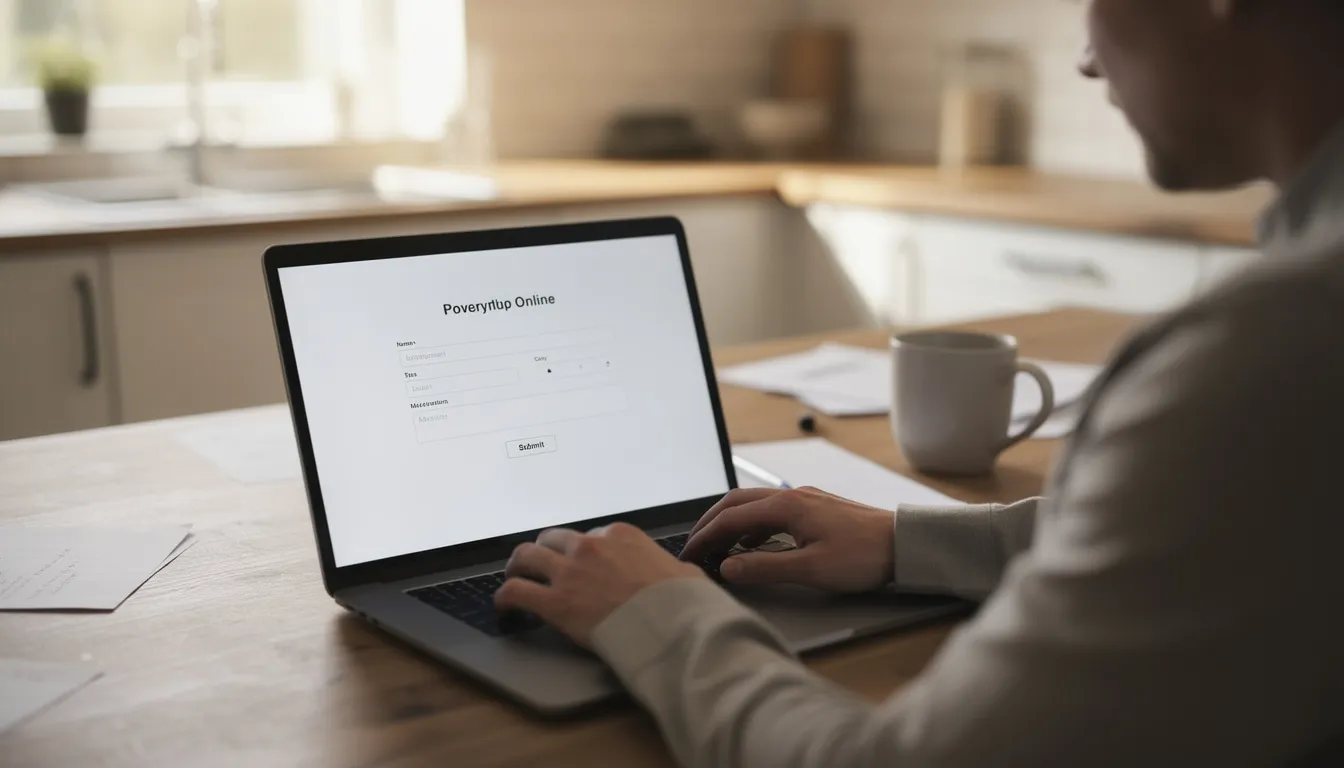
Step-by-step process:
- Access the form – Log into your employer’s HR system, or download the SC2 form from gov.uk
- Enter personal details – Your full name, national insurance number, job title, and department
- Add employer information – Company name and your line manager’s name
- Record exact dates – The first day you were too ill to work and the last day of sickness (include weekends and bank holidays)
- Describe your illness – Use plain language: “flu with fever and body aches” or “severe migraine” rather than medical jargon
- Sign the form – Type your name in the signature field, use a digital signature tool, or sign on a touchscreen
- Submit – Email to HR/your manager, upload to the portal, or print and hand in on your return to work
How to count your sick days:
Include both the first and last day you were too ill to work, even if you were not scheduled to work on some of those days. For example, if you fell ill on Friday and recovered by Monday, you would record Friday, Saturday, Sunday, and Monday (4 calendar days).
Tips for online completion:
- Use a form with clear date pickers to avoid errors
- Check that any free-text boxes allow enough space to describe your condition
- Confirm the form saves your progress if you need to step away
- Ensure any digital signature field is mobile-friendly if completing on your phone
Keep a copy:
Always download a PDF of the completed form, take a screenshot, or request an email confirmation. This protects you if there are any payroll queries or disputes about your absence later.
Official forms (SC2) and digital templates
The HMRC SC2 “Employee’s Statement of Sickness” is the standard self certification form used when an employer does not have their own version. It is available on gov.uk as a PDF.
How to access and use the SC2:
- Visit gov.uk and search for “SC2 form” or “self certification”
- Download the PDF to your computer, tablet, or phone
- Fill it in on-screen using a PDF reader, or print and complete by hand
- Email or hand the completed form to your employer on your return to work
Key sections of the SC2 form:
| Section | What to include |
|---|---|
| Your details | Full name, address, NI number |
| Employer details | Company name, employer address |
| Period of sickness | Start date and end date |
| Work pattern | Days you normally work each week |
| Reason for sickness | Brief description of illness or injury |
| Declaration | Date and signature confirming truth |
Digital templates:
If your employer provides their own digital template, it will often mirror the SC2 layout but convert fields into fillable form elements. These are easier to complete on mobile devices and may include:
- Dropdown menus for common conditions
- Auto-calculated day counts
- Electronic signature capture
- Automatic submission to HR email
Several secure online PDF editing services allow you to fill, sign, and share the SC2 form entirely online without printing or scanning. This is particularly useful if you do not have access to a printer while recovering at home.
Employer policies and evidence options
Individual employer policies can be stricter than the basic 7-day self certification rule. You should always check your staff handbook or employment contract to understand what your workplace requires.
Examples of policy variations:
- Requiring a self-cert form from day 1 of any absence
- Asking for a GP certificate for frequent short absences (e.g. more than 3 episodes in 6 months)
- Specifying email or HR portal only—no phone-based reporting
- Requiring a return to work meeting before you can resume duties
- Asking for strong evidence if absence coincides with weekends, bank holidays, or denied leave requests
Additional evidence some employers accept:
- Allied Health Professional (AHP) Health and Work Reports
- Physiotherapy letters
- Occupational health assessments
- Counsellor or mental health practitioner notes
Note that AHP reports cannot be used for certain benefit applications like Employment and Support Allowance, but employers may still rely on them for internal sick pay decisions.
Sector differences:
| Sector | Typical requirements |
|---|---|
| Warehouse/logistics | Often stricter policies due to physical demands; may require day-1 reporting |
| Office-based | More flexibility; email self-cert often accepted |
| Healthcare | Detailed symptom reporting; may need clearance before return |
| Retail | Phone reporting common; written self-cert on return to work |
Keep all correspondence about your sickness—emails, forms, text confirmations—in case of disputes about attendance, pay, or disciplinary matters. If your employer has doubts about your absence, having clear documentation helps you confirm your position.
Self-certification, SSP and holiday
Self-certified sickness directly affects your eligibility for statutory sick pay and can interact with your holiday entitlement in ways that many employees do not realise.

SSP basics:
Statutory sick pay starts after 3 “waiting days” of qualifying sickness. Your employer can rely on self certification for the first 7 days but may need a fit note to continue SSP beyond that point. For more information on the benefits of better sick leave management, see this guide.
For SSP purposes:
- You must be too ill to work for 4 or more days in a row (including non-working days)
- The current SSP rate is reviewed annually—check gov.uk for 2025 figures
- Your self-cert form helps accurately record these dates for payroll
Holiday during sickness:
Statutory holiday continues to accrue while you are on sick leave, whether self-certified or covered by a fit note. If your illness prevented you from taking annual leave you had booked or planned, you may be entitled to carry unused days into the next leave year.
Practical examples: See public and bank holidays around the world in 2025 for detailed date listings.
- Illness during booked holiday: If you fall ill on the first day of your annual leave, you can ask to treat those days as sick leave instead. Provide self certification for up to 7 days, then a fit note if longer. Your employer should then reinstate your holiday entitlement for you to take later.
- Choosing holiday over sick leave: Some employees choose to take paid holiday instead of sick leave if they do not qualify for SSP (for example, if earnings are below the threshold). However, your employer cannot force you to use holiday instead of sick leave.
- Bank holidays during sickness: If you are off sick over a bank holiday, that day counts as part of your sick leave, not as holiday used.
COVID-19, self-isolation notes and online processes
During the COVID-19 pandemic from March 2020 onwards, the NHS provided online isolation notes for people advised to self-isolate. This was a significant shift that replaced GP visits for evidence in many cases.
What changed:
- Employees could obtain digital proof of required isolation without booking a GP appointment
- The NHS website generated isolation notes based on test results or contact tracing
- Employers widely accepted these online notes as valid evidence for sickness absence
Although specific COVID isolation note services have evolved, the principle remains relevant: digital proof of sickness and self certification can often be obtained online without attending a surgery.
What employers may still reference:
- NHS online notes or COVID test results in their absence policies
- Vaccination appointment letters as acceptable evidence for time off
- Telephone or video GP consultations as standard practice for fit note requests
Current position:
Check current NHS and gov.uk guidance for updated rules on respiratory infections, self-isolation recommendations, and how to obtain any relevant sick notes online. The pandemic accelerated digital processes that many employers and employees now treat as normal practice in 2025.
Common mistakes to avoid with online self certification
Getting your self certification form wrong can delay sick pay, create confusion with HR, or even raise doubts about your absence. Here are the most common errors and how to avoid them.
Typical mistakes:
| Mistake | Why it matters | How to avoid |
|---|---|---|
| Wrong dates | Mixing up first day off with last day worked | Double-check calendar before submitting |
| Leaving sections blank | Form may be rejected or queried | Complete every required field |
| Vague illness description | HR cannot assess or record properly | Be specific: “stomach virus with vomiting” not just “unwell” |
| Forgetting to sign | Unsigned forms are not treated as valid | Check declaration/signature field before sending |
| Sending to wrong email | Form never reaches HR or manager | Confirm email address in your handbook or ask before sending |
| Miscounting days | May affect SSP eligibility or require fit note | Count all calendar days including weekends |
Before you submit:
- Review spelling of your name and national insurance number
- Confirm your manager or HR email address is correct
- If attaching a PDF, open it to check it displays correctly
- Save a copy to your own records
Deliberate false information:
Providing false details on a self certification form can be treated as misconduct. This includes exaggerating symptoms, claiming days you were not actually ill, or hiding the real reason for absence. Disciplinary action—up to and including dismissal—may follow if your employer decides to investigate.
Keep a simple log:
Maintain a personal record of your sick days in a calendar app or notebook. Include dates, symptoms, and which form you submitted. This makes it easy to answer any questions from HR or payroll and provides evidence if there is ever a dispute.
Frequently asked questions about self certificate forms online
Can I email my self-cert form instead of printing it?
Yes, in most cases. Many employers accept a completed SC2 form or their own form as an email attachment. Check your employer’s company policy to confirm this is acceptable. Some workplaces still require a printed copy on your return to work.
What if my employer refuses self-cert and insists on a GP note for 3 days off?
Employers can set stricter policies than the standard 7-day rule if they choose. If your contract or handbook states a GP note is required from day 1, you must follow that policy. However, getting a fit note for very short absences may involve a fee if your GP charges for private certificates.
How long should I keep a copy of my self-cert form?
Keep copies for at least 12 months, though some advisors recommend longer (2-3 years) in case of employment disputes. Digital copies stored securely in cloud storage or email are perfectly acceptable.
Can I self-certify if I work from home?
Yes. Self certification applies regardless of your work location. If you are too ill to perform your duties from home, you can self certify in the same way as an office-based employee. Remote work does not mean you must work through illness.
Is a photo of a completed paper form acceptable?
Usually, yes—if it is clear and legible. Many employers accept a photograph or scan of a handwritten form sent by email. However, check whether your employer prefers a typed PDF or has a specific upload portal.
Who can see my self-certification form at work?
Typically, your line manager and HR team will have access. Under GDPR and data protection rules, your employer must store this information securely and only share it with those who have a legitimate need to see it. If you have concerns about privacy, ask your HR department about their data handling procedures. For more guidance on reintegration, see these return to work best practices.
What if I have doubts about what to write for my illness?
Be honest and reasonably specific. You do not need medical terminology—phrases like “severe cold with fever” or “back pain preventing movement” are fine. If you are unsure whether to disclose a sensitive condition, speak to HR confidentially about what level of detail is required.
Self certification online is straightforward once you understand the 7-day threshold and your employer’s specific requirements. The key is to act promptly, provide accurate details, and keep copies of everything you submit.
Before your next sick day catches you off guard, take five minutes to locate your employer’s self-cert form or download the SC2 from gov.uk. Knowing where to find it—and how to fill it correctly—will save you stress when you are already feeling unwell.